

Greetings from KAN‑AKANE CO., LTD.
My name is Himiko Ito, and I am the Representative Director of KAN‑AKANE CO., LTD.
We are a travel agency based in Tōbetsu Town, Hokkaido, specializing in inbound travel to Japan.
Thank you very much for taking the time to read this article. I am often asked, “Why did you start your own company?” and “Why focus on inbound travel to Japan?” Here, I would like to share my background and the reasons I founded this company.
Our Company Name and Its Origin
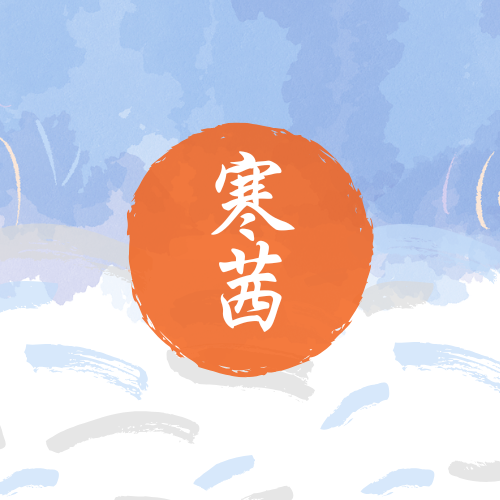
Our company name, 寒茜, is read “Kan-Akane.” It means “a brilliant sunset in the cold season.”
It has been ten years since I left Hokkaido for the Kansai region. Even now, I love watching the sunset over the snowy landscape from the window of my parents’ house whenever I return home. In the clear winter air, the akane (deep crimson) sunset looks even more vivid and beautiful. Our name carries my wish to share with travelers the wonder created by Japan’s four seasons.
How the Company Began
■ High School Years
Until I graduated from high school, I lived in Tōbetsu, Hokkaido, a town of about 15,000 people roughly 20 km north of Sapporo. To digress a little, in high school I met a close friend with a global outlook, and I began to take an interest in the wider world.
Inspired by Haruki Murakami’s novel Sputnik Sweetheart, I dreamed of becoming a wine importer, and after learning about Kobe City University of Foreign Studies from the university guide magazine Keisetsu Jidai, I decided to apply there to study English. Because of my score on the National Center Test, I tearfully gave up on the Department of International Relations, my first choice. To avoid spending an extra year preparing to retake the exams, I chose the Department of Chinese Studies by process of elimination, was accepted, and from there I became completely absorbed in Chinese.
■ University Years
At university, I studied Chinese, spent about three years in a club that performed theater in Chinese, and studied in Shanghai for a year. It was four years fully immersed in Chinese, plus one more year of leave to study abroad.
While still a student, I was invited by Professor Mao Danqing, a writer and visiting professor, to work as a reporter for Zai Riben (In Japan), a magazine introducing Japanese culture to readers in China. This became the starting point of my career, and out of a desire to share the appeal of local regions effectively, I went on to work mainly on inbound promotion for Hokkaido and Kansai.
It’s a long story, but I learned so much about China from the many Chinese friends I met at university, and that made me want to share Japan with people from China in return.
■ Professional Career
Since April 2019, I have worked mainly on tour planning and promotion for inbound travelers from Greater China. Along the way, I was also involved in influencer promotions and running official Chinese-language social media accounts. I tried many different approaches, but often had doubts about their effectiveness, which led me to rethink what results clients really want. In particular, I realized that relying on influence alone often fails to achieve the goal. This strengthened my wish to find a more fundamental and effective approach, and my answer for now is that, as a travel agency, the key is to directly bring in more travelers.
Also, though it may sound like self-praise, I have found that being a “Chinese-speaking Japanese person” is more valuable than I had expected.
In promoting Japan to overseas markets, I have gained extensive experience carefully explaining the cultural background of different countries and exchanging views with clients and media. Through this process, I have come to deeply appreciate how important it is to work with people of different cultures and values and to deepen mutual understanding. Cross-cultural coordination in particular requires a flexible and sensitive approach, and I believe my experience of constantly working between cultures is a skill that will serve me well as I grow as a business leader.
As the Chinese saying “When there is a policy from above, there is a countermeasure from below” suggests, I often felt a big difference from Japan in the cultural tendency to look for loopholes in rules and laws and argue that one’s actions are justified. Even so, by deepening mutual understanding, I was often helped by generous Chinese partners and was able to build trust across cultures. Building these deeper relationships and moving work forward together is one of my strengths.
■ Tourism MBA
In 2024, I enrolled in the Tourism MBA program at Kyoto University. Since I had majored in Chinese as an undergraduate, when I learned about this tourism management program I wanted to study the field from a broader perspective, and decided to apply. Learning alongside classmates from diverse backgrounds, I researched what an ideal Japanese DMC (Destination Management Company) should look like.
Conclusion: What KAN‑AKANE Aims For
Looking back, I grew up in a small town in Hokkaido, became fascinated by Chinese, a language I had chosen by process of elimination, and returned to study in an MBA program after hitting obstacles in my work. All of these experiences have made me who I am today.
The wish to “deliver more meaningful value” that I felt working in inbound tourism, and the hope of sharing the local scenery I love with the world: KAN‑AKANE CO., LTD. was founded to give shape to these feelings.
We are not simply a company that sells travel. We want to be a partner in designing “moments of inspiration” that go beyond language barriers and cultural differences, helping people from Japan and around the world understand each other more deeply.
Our journey has only just begun, but we will create trips that stay vivid in people’s hearts, like an akane sunset glowing in the winter sky.
We would be grateful for your continued support as KAN‑AKANE moves forward.